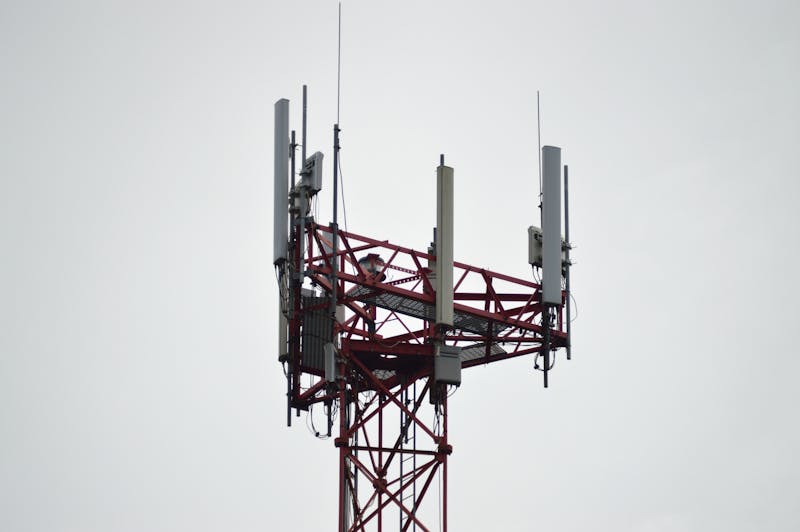

Singapore has long positioned itself as Asia's premier technology hub, and nowhere is this ambition more evident than in the mobile communications sector. As the city-state continues to roll out next-generation network infrastructure, the question of quality, responsible sourcing, and sustainability has moved from the boardroom to the front lines of everyday mobile testing operations. At Sinus TP, we believe that how we test mobile networks and deliver topup and recharge solutions matters just as much as the results we generate. This article explores the principles that guide our approach and why they matter for Singapore's mobile ecosystem as a whole.
Quality as the Foundation of Reliable Testing
The phrase "quality assurance" is used so frequently in technology that it risks becoming a hollow buzzword. But for mobile testing practitioners, quality is not an abstract concept — it is the difference between a network that performs flawlessly during peak commute hours and one that drops calls or throttles data at the worst possible moment. In Singapore, where the population density is among the highest in the world and mobile penetration consistently exceeds 150%, even marginal degradations in signal quality have outsized impacts on users.
At Sinus TP, our quality framework rests on three interconnected pillars: measurement accuracy, data integrity, and reproducibility. Measurement accuracy means that every signal reading, latency metric, and throughput data point collected by our testing participants reflects real-world conditions rather than laboratory idealisations. Data integrity means that the information flows from tester to analysis platform without manipulation, ensuring that the insights derived from our community are genuinely representative. Reproducibility ensures that testing methodologies are standardised across different devices, operating systems, and geographic locations so that results can be meaningfully compared over time.
The Importance of Device Diversity in Testing Programs
One of the most underappreciated dimensions of quality in mobile testing is device diversity. Singapore's consumer market spans an enormous range of hardware — from flagship devices running the very latest chipsets to mid-range and budget handsets that represent the daily reality for a significant portion of the population. A testing program that draws data exclusively from premium devices will systematically overestimate the quality of experience for the average user.
This is why Sinus TP actively recruits testers across the full spectrum of device categories. The richness of our dataset — and therefore the value of the insights we provide to network operators, application developers, and regulatory bodies — depends directly on the diversity of the devices contributing to it. Participants using older or lower-specification handsets are not an afterthought; they are essential contributors whose experiences illuminate the performance gaps that matter most to the broadest segment of the public.
The true measure of a network's quality is not how it performs for the top ten percent of users with the latest devices, but how it serves the everyday experience of the ordinary person on the MRT heading to work.
— Marcus Lim, Senior Technology Analyst, Sinus TP
Responsible Sourcing in the Digital Economy
The concept of responsible sourcing — so well established in sectors like apparel, food, and mining — is only beginning to gain traction in the technology services industry. For a company like Sinus TP, responsible sourcing encompasses two distinct but related domains: the sourcing of the technology tools we use to deliver our services, and the sourcing of the data and insights that form the core of our business model.

Ethical Data Collection and Participant Welfare
Our testing participants are not passive data sources — they are active contributors whose time, device resources, and personal experiences generate the raw material that powers our insights. This means we have a responsibility to ensure that participation in our programs is genuinely beneficial to those involved, not merely extractive. Our rewards structure is designed to reflect the real value that testers create: participants receive topup credits and recharge rewards that are commensurate with the quality and volume of testing data they contribute.
Beyond fair compensation, responsible sourcing in the context of data means obtaining explicit, informed consent for all data collection activities, storing information securely, and being transparent with participants about how their contributions are used. Singapore's Personal Data Protection Act (PDPA) sets a rigorous baseline, and our internal data governance policies go further, prohibiting the sale of individual-level data to third parties under any circumstances.
Selecting Technology Partners with Integrity
The platforms, tools, and infrastructure that underpin our topup and recharge services are also subject to our sourcing standards. When evaluating technology partners, we apply criteria that go beyond price and performance to include:
- Supply chain transparency: Partners must be able to demonstrate clear visibility into their own supply chains, particularly for hardware components where ethical mining and labour practices are relevant.
- Environmental certifications: We prioritise partners who hold recognised environmental management certifications, such as ISO 14001, and who have made credible commitments to reducing carbon emissions.
- Data sovereignty: All processing of Singapore user data must comply with local regulatory requirements. We do not work with partners who cannot demonstrate compliance.
- Social responsibility: Partners are expected to uphold fair employment practices and contribute positively to the communities in which they operate.
Sustainability: Building for the Long Term
Sustainability in mobile technology is often discussed narrowly in terms of device recycling or energy consumption. While these are genuinely important issues, Sinus TP takes a broader view that encompasses the long-term sustainability of the testing ecosystem itself, the economic sustainability of our participant community, and our environmental responsibilities as a technology-enabled business.

Sustaining the Testing Community
A testing program is only as sustainable as the community of participants that powers it. Attrition — testers who sign up, contribute briefly, and then disengage — is a chronic challenge for crowdsourced data collection initiatives. The root cause is almost always the same: participants do not feel that the value exchange is fair or meaningful over the long term.
Sinus TP addresses this through a combination of competitive topup rewards, a transparent points and incentive system, regular communication about how testing data has contributed to measurable network improvements, and a community platform where testers can connect, share insights, and stay informed about the state of Singapore's mobile networks. When participants understand the impact of their contributions and are fairly rewarded for them, they remain engaged — and the quality of the data they generate improves over time as their experience deepens.
Environmental Responsibility in Digital Services
The digital economy has a physical footprint that is easy to overlook. Every data packet generated by our testing activities travels through physical infrastructure — base stations, fibre cables, data centres — that consumes energy and requires ongoing maintenance. As a company that generates substantial data traffic, we have a responsibility to minimise the environmental impact of our operations where possible.
In practical terms, this means optimising our data collection protocols to minimise unnecessary transmission, partnering with data centre providers who operate on renewable energy where available in Singapore, and publishing an annual environmental impact report that holds us accountable to our own standards. We also actively engage with our technology partners to advocate for industry-wide improvements in energy efficiency.
A Commitment That Goes Beyond Compliance
Quality, responsible sourcing, and sustainability are not constraints that limit what Sinus TP can achieve — they are the foundation on which lasting value is built. Singapore's mobile ecosystem is too important, and the trust of our testing community too precious, to be treated as secondary considerations. By holding ourselves to high standards in every dimension of our operations, we build the credibility that allows us to serve network operators, application developers, and everyday mobile users more effectively.
If you are interested in contributing to Singapore's mobile testing ecosystem — or in exploring how Sinus TP's insights and topup solutions can support your organisation's goals — we invite you to get in touch. Our commitment to quality means your time and your data will always be handled with the care and respect they deserve.